I was sitting in a tiny noodle shop in Yangon last month, slurping down a bowl of mohinga, when my phone buzzed with a notification that made me nearly choke on a chili flake. A group of physicists had just announced they'd stumbled onto something that shouldn't exist — a new state of matter that seems to break the rules we've been teaching in classrooms for decades.
Now, I'm not a physicist. My last formal encounter with the subject involved a very patient teacher and a C-minus. But I've spent enough years writing about science to know when something is genuinely big versus when it's just big in a press release. This one? This one is the real deal.
Let me break down what actually happened, why it matters, and why I think this discovery could do what every scientist dreams of — force us to redraw the map of reality.
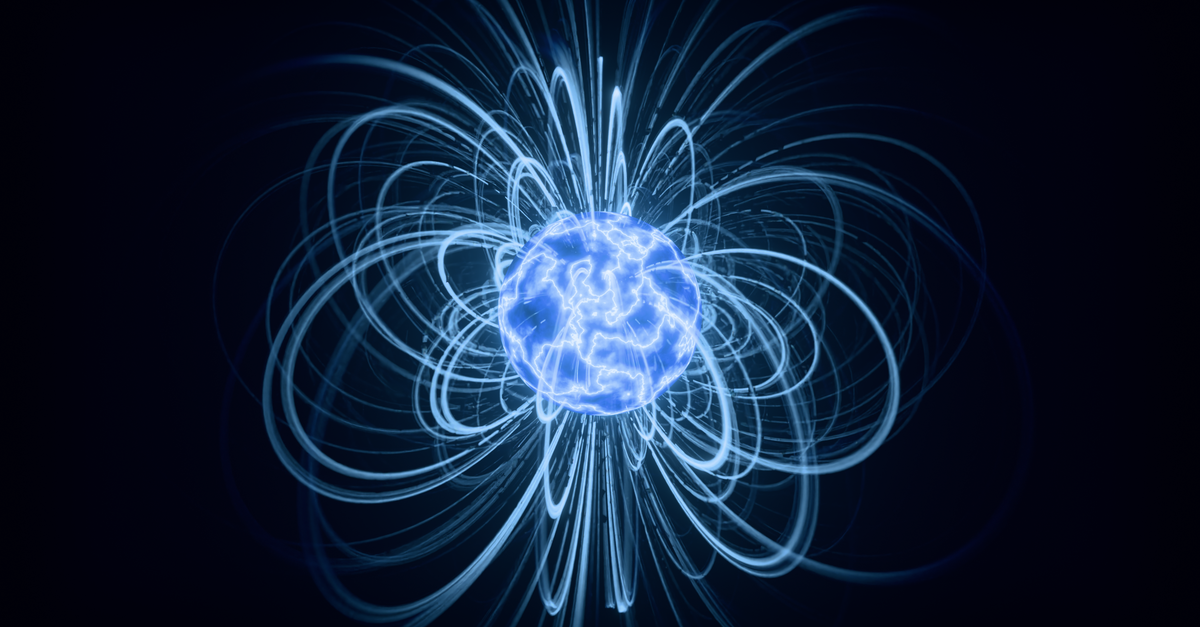
The Experiment That Shouldn't Have Worked
Here's the setup. A team of researchers was running experiments on ultra-cold atoms — the kind of temperatures where everything slows down to a crawl and weird quantum stuff starts happening. Standard procedure, nothing flashy.
But when they dialed in a specific set of conditions, the atoms didn't behave the way the math said they should. They didn't form a solid. They didn't act like a superfluid or a Bose-Einstein condensate — the two states of matter physicists have been studying for decades. Instead, they did something entirely new.
The particles organized themselves into a pattern that nobody predicted. Not a crystal, not a liquid, not a gas. Something in between. Something that seems to exist in a quantum state that blends order and chaos in a way that makes traditional physics textbooks look incomplete.
I've found that when scientists use phrases like "we didn't expect this," it's usually either a measurement error or a Nobel Prize. After months of replication attempts, this one is leaning hard toward the latter.
Why Your Physics Textbook Might Need a Rewrite
Let's be honest — most of us learned about three, maybe four states of matter in school. Solid, liquid, gas, and the bonus round: plasma. If your teacher was feeling generous, they might have mentioned Bose-Einstein condensates.
But modern physics has quietly acknowledged at least a dozen distinct states of matter, depending on how you count them. There's time crystals. There's quark-gluon plasma. There's superfluids and supersolids. The list keeps growing.
What makes this new discovery different is that it doesn't fit neatly into any existing category. It's not just another variation on a theme — it's a genuinely novel arrangement of matter that appears to arise from quantum entanglement on a scale we haven't seen before.
Here's what most people miss: this isn't about adding one more item to a list. It's about the fact that our fundamental framework for classifying matter might have a hole in it big enough to drive a truck through.
The Quantum Weirdness Nobody Saw Coming
To understand why physicists are losing their minds over this, you need to grasp one concept: emergence.
Emergence is what happens when simple things combine to create complex behavior. A single water molecule isn't wet. But a billion of them together? You get wetness. That's emergence.
The new state of matter appears to be an extreme example of this. Individual atoms are doing their own quantum thing, but collectively, they're producing a phenomenon that can't be explained by looking at any single particle. It's like watching a flock of starlings form those mesmerizing shapes in the sky — except the "birds" are subatomic, and the "shapes" are altering the fundamental properties of the material.
The researchers found that this state exhibits:
- Topological protection — its properties stay stable even when you poke and prod it
- Long-range quantum entanglement — particles influencing each other across macroscopic distances
- Anomalous thermal behavior — it conducts heat in ways that violate our current models
That third one is the kicker. If the thermal data holds up, it means there's a gap in our understanding of thermodynamics at the quantum level. And thermodynamics, in case you forgot, is basically the physics equivalent of gravity — it's everywhere, and it doesn't negotiate.
What This Means for the Future (Hint: It's Not Just Academic)
You might be thinking, "Cool, Aung, but how does this affect my life?" Fair question. I ask it every time I read about another particle discovery.
The honest answer is: not today, probably. But give it twenty years.
New states of matter have a track record of changing technology in ways nobody predicts. When superconductors were discovered in 1911, they were a laboratory curiosity. Now they're the backbone of MRI machines and maglev trains. When researchers first created Bose-Einstein condensates in 1995, people said it was pure science with no applications. Today, that research underpins atomic clocks, quantum computing, and GPS precision.
This new state — with its topological protection and stable quantum behavior — is exactly the kind of thing quantum computer engineers have been praying for. Topological quantum computing has been a holy grail for years because it promises error-resistant qubits. If this discovery delivers on even half its potential, we're looking at a leap forward in computing that could make today's fastest supercomputers look like abacuses.

The Skeptic's Corner (Because I Owe You Honesty)
I'd be a bad blogger if I didn't add a bucket of cold water here.
Extraordinary claims require extraordinary evidence, and while the initial results are compelling, replication is the only thing that matters in physics. Remember the faster-than-light neutrino fiasco in 2011? Everyone lost their minds, and then it turned out to be a loose cable. Science is humbling like that.
The team behind this discovery has published their methodology and is inviting independent verification. That's a good sign. But until three or four other labs reproduce the results with their own equipment, I'm keeping one eyebrow permanently raised.
Also worth noting: "new state of matter" gets thrown around a lot in headlines. Sometimes it means a genuinely new phase of matter. Sometimes it means a new way of arranging atoms within an existing phase. The distinction matters, and the popular press (myself included, occasionally) tends to blur it.
The Bigger Picture: Why We Should All Care
Here's my real takeaway, and it's not about the science itself.
We live in an era where it feels like we've figured most things out. The internet has made us collectively arrogant about knowledge. We Google something, get an answer, and move on. But discoveries like this remind us that the universe is still keeping secrets.
Somewhere in a laboratory right now, a grad student is staring at data that doesn't make sense. Somewhere, a theorist is scribbling equations that might rewrite a chapter of a textbook. Somewhere, the next fundamental shift in human understanding is waiting to be noticed.
That should excite you. It excites me.
So here's my challenge: the next time you see a science headline that sounds too wild to be true, don't scroll past it. Read it. Question it. Follow the replication attempts. Be part of the species that stays curious.
Because the universe just handed us another puzzle piece. And honestly? I can't wait to see what picture it's building.
What's your take — genuinely exciting breakthrough, or another case of hype outpacing reality? Drop a comment and let's argue about it like proper science nerds.
